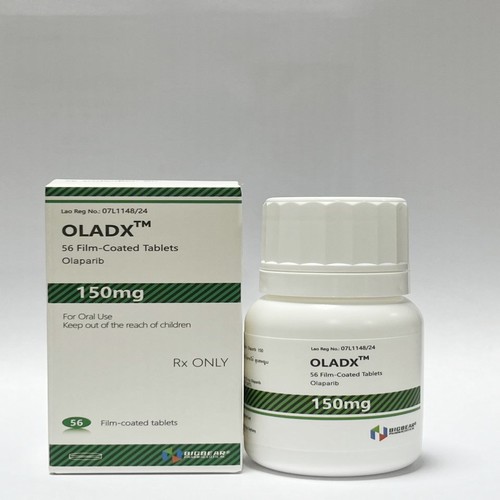

Olaparib(奥拉帕尼)国内上市时间,奥拉帕尼(Olaparib)在国外最早是在2014年12月由欧洲药品管理局(EMA)批准,随后,在2015年,美国食品药品监督管理局(FDA)也批准了奥拉帕利用于治疗BRCA突变的晚期卵巢癌,目前在国内已经上市,国内最早上市时间是2018年8月,由国家药品监督管理局(NMPA)批准上市。
Title: Olaparib (奥拉帕尼) Domestic Launch Date: A Breakthrough Treatment for Various Cancers
Introduction:
Olaparib, a revolutionary medication for the treatment of multiple types of cancer including ovarian, breast, pancreatic, prostate, and primary peritoneal carcinoma, has recently obtained approval for release in the domestic market. This article aims to provide accurate information regarding the domestic launch of Olaparib and its potential impact on cancer treatment.
1. The Rising Need for Effective Cancer Treatments:
Cancer remains one of the most prevalent and deadly diseases worldwide. Traditional treatment methods often prove inadequate, necessitating the development of innovative therapies. Olaparib, a poly ADP-ribose polymerase (PARP) inhibitor, demonstrates promising efficacy in targeting cancer cells and potentially improving patient outcomes.
2. Olaparib's Approval and Clinical Trials:
After rigorous and extensive research, Olaparib has successfully completed clinical trials and received regulatory approval for domestic distribution. The drug has shown remarkable results in treating ovarian, breast, pancreatic, prostate, and primary peritoneal cancers, making it a vital treatment option for patients suffering from these malignancies.
3. Benefits and Mechanism of Olaparib:
Olaparib functions by inhibiting the PARP enzymes, which play a crucial role in repairing DNA damage in cells. By inhibiting this repair process, Olaparib selectively targets and destroys cancer cells that have certain genetic mutations, such as BRCA1 and BRCA2. This mechanism of action makes Olaparib an invaluable treatment, particularly for patients with specific genetic alterations.
4. Efficacy and Potential Side Effects:
Clinical trials have demonstrated that Olaparib exhibits substantial efficacy in extending progression-free survival and overall survival rates in patients with advanced cancers. Additionally, the drug offers improved treatment options for patients who have limited responses to standard chemotherapy or radiation therapy. However, like any medication, Olaparib may be associated with certain side effects, which should be carefully monitored and managed by healthcare professionals.
Conclusion:
The domestic launch of Olaparib provides a ray of hope for patients battling ovarian, breast, pancreatic, prostate, and primary peritoneal cancers. This breakthrough treatment offers improved therapeutic outcomes and advances the field of precision medicine by targeting specific genetic mutations. As Olaparib becomes available to patients in the domestic market, it has the potential to transform cancer treatment strategies and significantly impact patient care.